


Our services
We make any asset investable
Blackbull specializes in converting private equity and alternative assets into bankable, transferable Certificate Notes with their own ISIN, accessible to qualified investors in the regulated capital markets.
Recent news
From the desk
Start a conversation
Turn your asset or opportunity
into an investable proposition.

Services
From asset to ISIN
We financial engineer any traditional or alternative asset to make it investable, specializing in converting private equity, illiquid, and non-bankable assets into Certificate Notes - bankable, transferable instruments with their own ISIN, held directly in an investor's bank account.
Core service
Certificate Notes
We make any asset investable
A Certificate Note is a bankable, transferable security issued against your asset or strategy. It carries its own ISIN, settles through the regulated international clearing and settlement system that banks already use, and can be deposited directly into an investor's bank account like any other holding.
This is how a company's private equity is made investable. How a Ferrari collection becomes a portfolio line. How a music catalogue becomes subscribable. How a superyacht's charter income becomes a cashflow-backed instrument. How a sports team raises capital. How art and luxury collections can be leveraged. The underlying assets change; the mechanism does not.
At a glance
- InstrumentAMC / CLN / Tracker
- IdentifierISIN
- Held viaInvestor bank account
- TransferableYes
- ValuationIndependent
- UnderlyingAny asset of value
- InvestorsAsset managers & qualified
- EnvironmentFully regulated
Selected mandates
Certificate Notes we have engineered
Also available
Further services
Meeting global funding sources
Meet qualified capital sources in person, one-on-one, to discuss the funding of your company. Every introduction is drawn from a global network of private and institutional investors.
That network spans Europe, USA, and Asia, with combined managed assets above USD $100bn, and we guarantee the sources you meet are both qualified and interested.
- Europe · USA · Asia
- $100bn+ network
- One-on-one
- Qualified sources
Getting listed cost-effectively
A pay-as-you-go route to a capital market listing. We begin by matching your company's qualifications against the listing suitability of targeted exchanges, so you only pursue venues that fit.
You then select your preferred venue from those that matched, and Blackbull processes and executes the listing on it, keeping the cost to what the outcome genuinely requires.
- Pay-as-you-go
- Suitability match
- Venue selection
- Processed & executed
Feasibility
Not sure your asset can be wrapped
into a certificate note?

Ecosystem
Licensed and Regulated
Operating within a licensed and regulated ecosystem, Blackbull facilitates the advisory, financial engineering, asset management, issuance, and distribution of its investment products, providing confidence and security to both clients and investors.
The platform
The Structured Capital Platform
Blackbull is an official partner of the Structured Capital Platform, the layer that connects asset management, financial engineering, product issuance, and product distribution across a group of specialist member entities, each handling one part of a transaction so that the whole remains institutional-grade end to end.
Affiliated Institutions
Capital markets & Financing Institutions
Blackbull instruments are admitted, listed, traded, and financed across a network of traditional exchanges, OTC markets, digital venues, and financial institutions. Our affiliations include institutions such as SIX SIS, Euroclear, Swissquote Bank, Incore Bank, ISP Securities, Kraken, and more, so each mandate can be placed where it genuinely belongs.
The Circle
Private Capital Network

About
Who we are
Blackbull is a boutique capital advisory and financial engineering firm turning private, illiquid and non-bankable assets into investable instruments. Leveraging our private capital markets network, backed by a team of senior executives with a footprint across six continents and more than twenty years of transactions engineered, Blackbull specializes in making any assets investable.
People
The team

A 30-year track record in investments, capital markets and policy across 30+ countries. Co-founded The Maestro Group, advised U.S. Senator Max Baucus, and spent thirteen years at UBS.
LinkedIn ↗
Focused on structured products, digital-asset listings and securitisation across the certificate programmes. A 2018 World Blockchain Summit speaker and an Edinburgh engineering graduate.
LinkedIn ↗
A valued member of the advisory board for Asia, instrumental in building the firm's relationships across the region and a fixture at its early engagements. Remembered with deep gratitude.

Advisor for Asia with decades of chief-of-staff experience to senior executives and board members across finance, transportation, mining and technology, and Asian-European market transactions.

Advisor for North America in international trade and government relations. Chairman of Jinboast E-Commerce Tianjin, former CEO of the Global Trade & Technology Center, and an NYU MPA.
Global footprint
Where we have been active
Status: 2026
Cities with more than one entry are outlined in gold — click one to zoom in. Click a category above to filter the map.
In their words
References

News
Issuances & announcements
Selected mandates, launches, listings, and completed transactions engineered by Blackbull. This is a running record of corporate news, investment instruments, and capital market admissions delivered for clients across Europe, the Americas, Africa, and Asia.
Guides · The basics
What is an Actively Managed Certificate (AMC)?
An Actively Managed Certificate turns an investment strategy into a single security with its own ISIN, which an investor holds in an ordinary bank account. This guide explains how it works, who is involved, and where it fits and where it does not.
The short answer
An Actively Managed Certificate (AMC) is a debt security issued by a bank or a dedicated issuance vehicle. Its value follows a reference portfolio that a named manager runs at their discretion, within written investment guidelines. The certificate carries its own ISIN, settles through the same clearing systems as shares and bonds, and sits in an investor's custody account like any other holding.
For the investor, an AMC is one line in a portfolio: one security to buy, value and sell. For the manager, it is a way to package a strategy without setting up a fund, and to reach investors whose banks will only buy securities they can book, price and hold.
How an AMC works
Every AMC has the same basic parts, whatever sits inside it:
- The issuerA bank or a securitisation vehicle, often a compartment of one, issues the certificate and owes investors its value.
- The reference portfolioThe assets whose value the certificate follows, held by or for the issuer.
- The portfolio managerDecides what the portfolio holds, within the agreed investment guidelines.
- The ISIN and clearingThe identifier and settlement route that let any bank book and hold the certificate.
- The service providersPaying agent, custodian and calculation agent handle cash, safekeeping and the regular valuation.
The investor never holds the underlying assets directly. They hold a claim on the issuer, whose payment obligation is set by the value of the reference portfolio. This is what makes the instrument bankable, and it is also the source of the main risk (see below).
What “actively managed” means
The difference between an AMC and a tracker certificate is who decides what the portfolio holds. In a tracker, a fixed basket or a rules-based index decides, and nobody rebalances at their own discretion. In an AMC, a portfolio manager can buy, sell and reweight positions at any time, within the investment guidelines set out at launch.
Those guidelines matter. They define the eligible assets, concentration limits, leverage, and how often the portfolio is valued. A well-written set of guidelines gives the manager room to manage while giving investors and the issuer a clear picture of what they are exposed to.
What can sit inside an AMC
Listed shares, bonds, ETFs and cash are the most common holdings, and they are the simplest to value and to trade. But the structure is not limited to them. Through an issuer or compartment that can hold them, AMCs have been built on private company shares, music royalties, collectible cars, real estate and digital assets. The more unusual the underlying asset, the more work goes into valuation, custody and liquidity terms. It is the same mechanism with more engineering.
 Example of our structuring work · Live issuanceES Core Index AMC, designed by Blackbull, goes liveThe ES Core Index AMC, designed and engineered for Exponential Science Capital — an organisation focused on accelerating the widespread adoption of exponential technologies — is officially live and ready for subscriptions. Read the release →
Costs and timeline
Compared with a fund, an AMC is usually quicker and cheaper to launch, because there is no new legal entity to set up and no fund authorisation to obtain. The costs that remain are a one-off structuring and issuance fee, then running fees for the issuer, the paying agent, custody and calculation, plus the manager's own fee. The exact figures depend on the issuer, the underlying assets and the expected size.
Timing depends mostly on issuer onboarding: compliance review of the manager and the assets, documentation and the ISIN. A liquid, listed strategy moves fastest. A private or alternative underlying takes longer, because valuation and custody have to be agreed first.
Risks to understand
- Issuer risk. The certificate is a debt obligation of the issuer. If the issuer defaults, investors may lose money even if the portfolio performed well, unless the structure is collateralised or ring-fenced in a segregated compartment.
- Manager risk. Performance depends on the manager's decisions within the guidelines.
- Liquidity. Secondary trading usually depends on the issuer or a market maker buying back. It is not a deep exchange market.
- Valuation. For anything other than listed assets, the price of the certificate is only as good as the valuation behind it.
- No fund protections. An AMC is not a collective investment scheme, so it does not carry the regulatory safeguards that come with an authorised fund.
General information only. This is not financial advice. See the important information at the foot of this page.
Blackbull in practice
AMCs we have engineered
Examples of Blackbull’s structuring work, shown for illustration only. They are not an offer, a recommendation or an invitation to invest in any of these instruments.
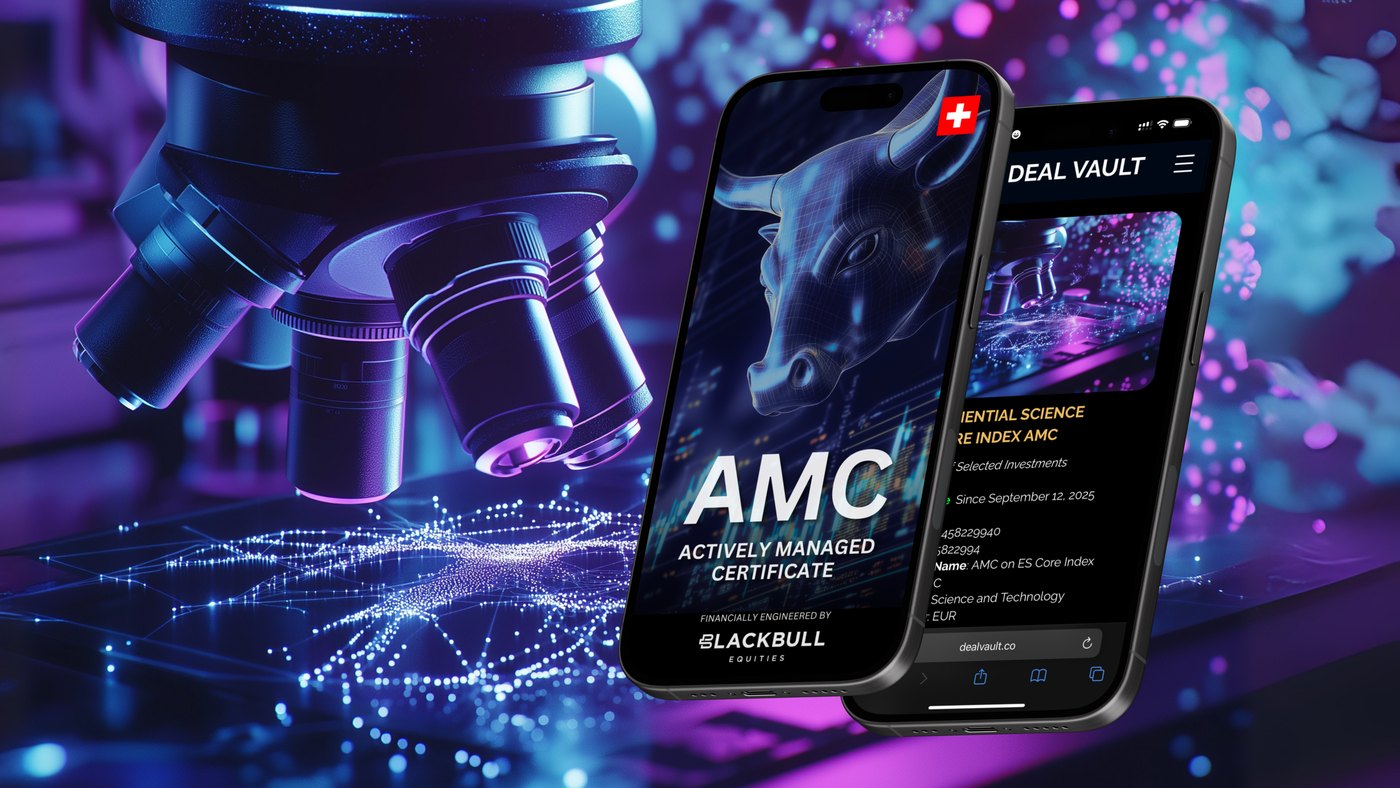
ES Core Index AMC, designed by Blackbull, goes live
The ES Core Index AMC, designed and engineered for Exponential Science Capital — an organisation focused on accelerating the widespread adoption of exponen…
Read the announcement →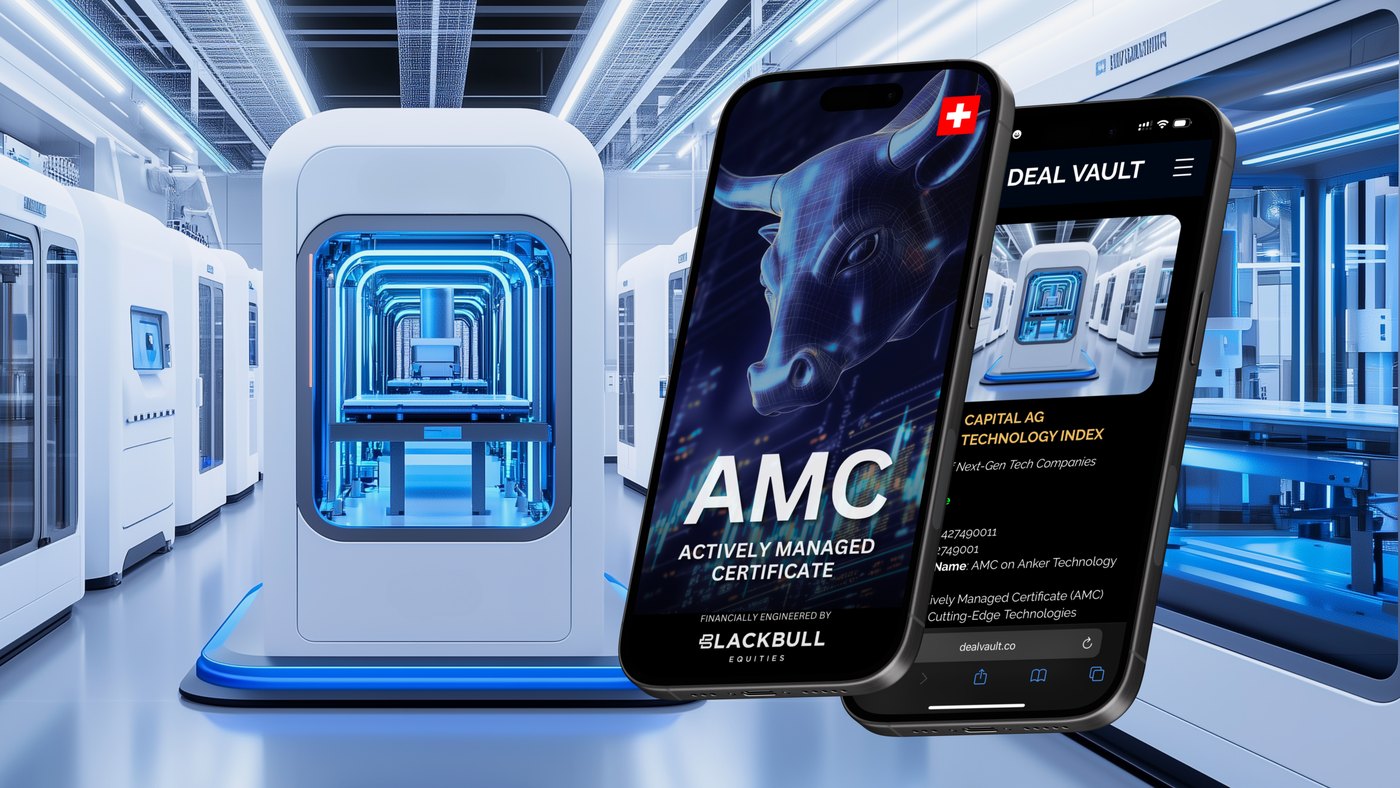
Anker Technology Index AMC, designed by Blackbull, goes live
The Anker Technology Index AMC, designed and engineered for Swiss investment boutique Anker Capital AG, is officially live.
Read the announcement →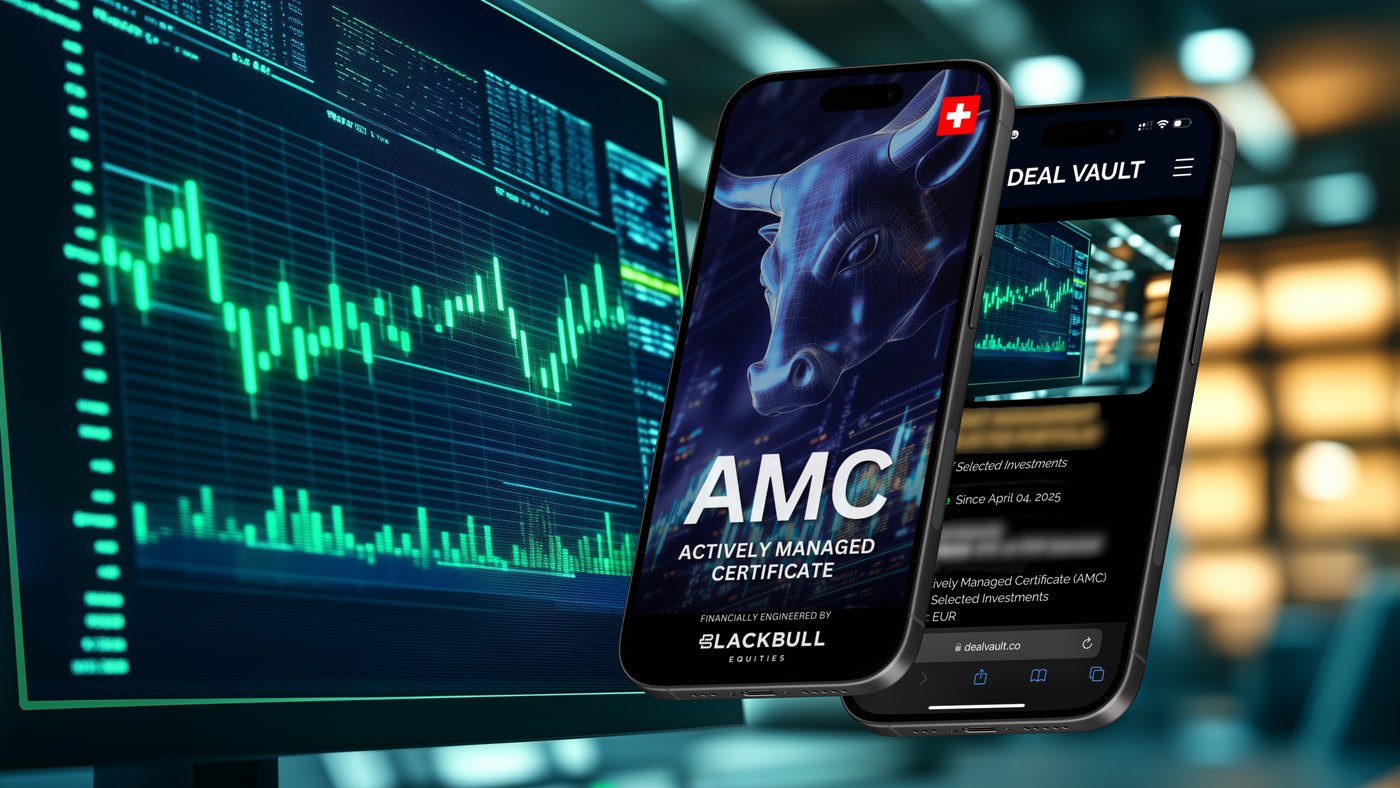
AMC for Swiss asset management firm, designed by Blackbull, goes live
The AMC designed and engineered for a Swiss asset manager is officially live.
Read the announcement →Is an AMC a fund?
No. A fund is a collective investment scheme with its own legal and regulatory framework. An AMC is a security issued by an issuer. It behaves like a fund for the investor, but legally it is a debt instrument.
Who can invest in an AMC?
This depends on the jurisdiction and the documentation. Many AMCs are offered only to professional or qualified investors, through banks and asset managers. Offers to retail investors trigger additional requirements, such as a key information document.
Does an AMC need to be listed on an exchange?
No. Many AMCs are not listed and settle over the counter through the clearing systems. A listing can be added where investors need it.
Can an AMC hold private or illiquid assets?
Yes, through an issuer that can hold them, with valuation, custody and redemption terms written around the asset. Blackbull specialises in exactly these structures.
Sources
- ISO 6166, International Securities Identification Number (ISIN).
- Swiss Financial Services Act (FinSA), in force since 1 January 2020: provisions on structured products and key information documents.
- Regulation (EU) No 1286/2014 on key information documents for packaged retail and insurance-based investment products (PRIIPs).
Important information. This guide is not financial advice. It is general information about how certain financial instruments work. It is not investment, legal or tax advice, and it is not an offer or a solicitation to buy or sell any security. Certificate Notes are complex instruments: their value can fall as well as rise, investors can lose some or all of the amount invested, and they are exposed to the credit risk of the issuer. Many are available only to professional or qualified investors, and the rules differ by country. References to Blackbull mandates and launches illustrate our structuring work, are shown for illustration only, and are not an indication of future results. Blackbull Equities provides advisory and structuring services; it does not itself issue securities, accept deposits or manage client assets. This website is not directed at persons in any jurisdiction where its content would be unlawful, including the United States. Seek independent professional advice before making any investment decision.